





As Solar Cycle 25 reaches its peak in 2024–2025, HF propagation is expected to improve significantly. This period of heightened sunspot activity enhances ionospheric energy therefore boosting HF radio communication. Solar Cycle 25 began in December 2019 and will likely continue until 2030–2031, with its peak occurring around 2024–2025.
Here’s everything you need to know to maximize radio wave propagation during this solar cycle!
1. Understanding the Earth’s Atmosphere
Ready to explore radio wave propagation? First, let’s dive into Earth’s atmosphere!
The atmosphere consists of nitrogen, oxygen, hydrogen, and other gases. Air density is highest near the Earth’s surface, acting as a good dielectric. At higher altitudes, the air becomes thinner, with the atmospheric limit extending up to 1,000 kilometers or more.
The troposphere, the lowest layer (up to 10–14 km), has a well-mixed gas composition. At higher altitudes, gases separate into layers based on their weight, creating a non-homogeneous atmosphere.
Solar radiation, cosmic rays, and other factors ionize the air, creating free electrons and positive ions. This ionized air significantly impacts radio wave propagation. The ionosphere, the ionized part of the atmosphere, is divided into several layers (see Figure 1):
D Layer: 60–80 km (exists only during the day).
E Layer: 90–130 km.
F Layer: 250–350 km at night. During the day, it splits into F1 (180–220 km) and F2 (220–500 km).
The altitude, thickness, and conductivity of these layers vary daily, seasonally, and over the 11-year solar cycle. Greater solar ionization increases conductivity and thickness while lowering altitude.
Magnetic storms, caused by solar electron eruptions, disrupt radio reception by affecting the F2 layer. Sporadic E layers, formed by meteors at around 100 km, also create temporary ionization.

2. Key Phenomena in Radio Wave Propagation
2.1 — Energy Dissipation
As radio waves travel, their energy spreads out, reducing intensity. Directional transmission focuses energy into a narrow beam, increasing range and enabling secret communications.
2.2 — Absorption
All radio waves lose energy when passing through substances like the ground, forests, or mountains. Conductive surfaces (e.g., water) enhance propagation, while dry land increases absorption.
2.3 — Reflection and Refraction
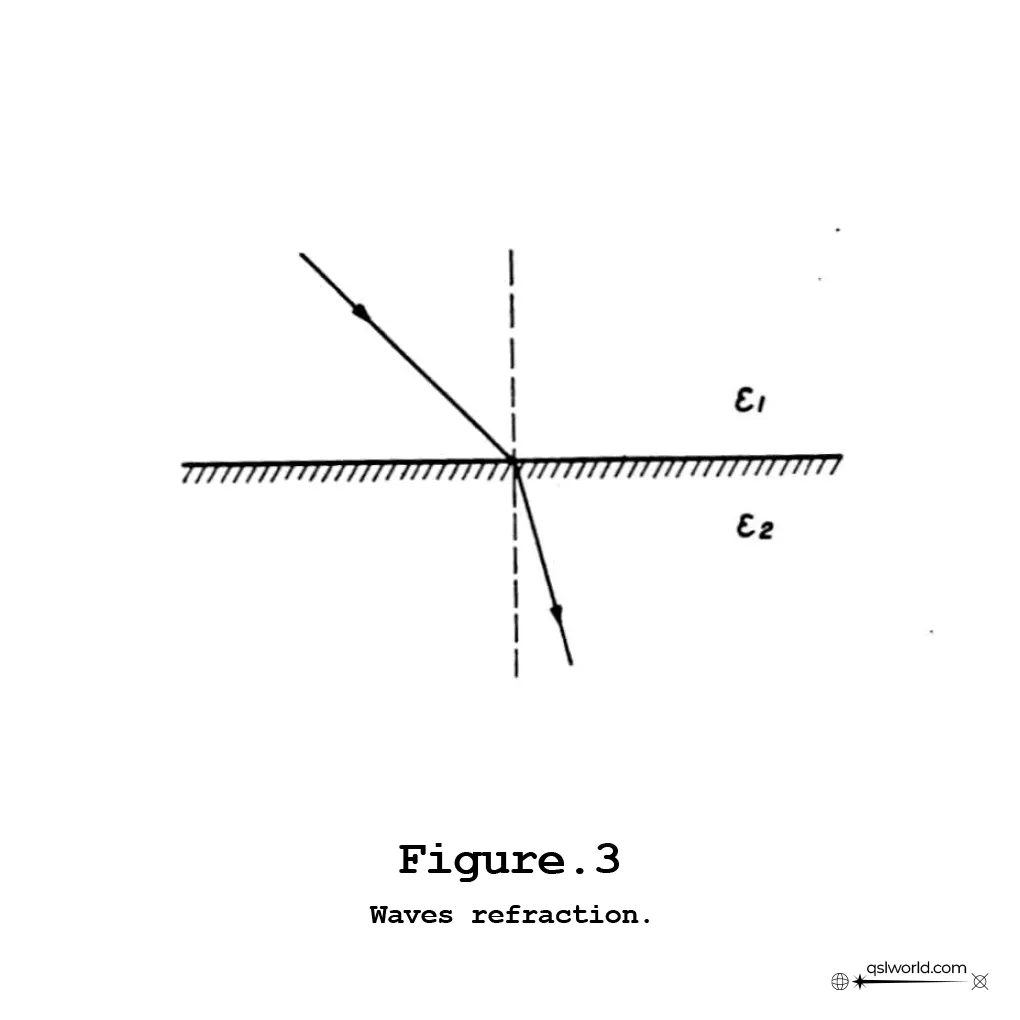
Radio waves reflect off conductive surfaces and refract when passing between mediums with different dielectric constants (see Figure 2 and Figure 3).
2.4 — Diffraction
Waves bend around obstacles like mountains, enabling signals to reach areas blocked by direct paths (see Figure 4).


3. Propagation of Radio Waves
3.1 — Ground Waves
Ground waves travel along the Earth’s surface but are absorbed by the ground and obstacles. Higher frequencies experience greater absorption.
3.2 — Sky Waves
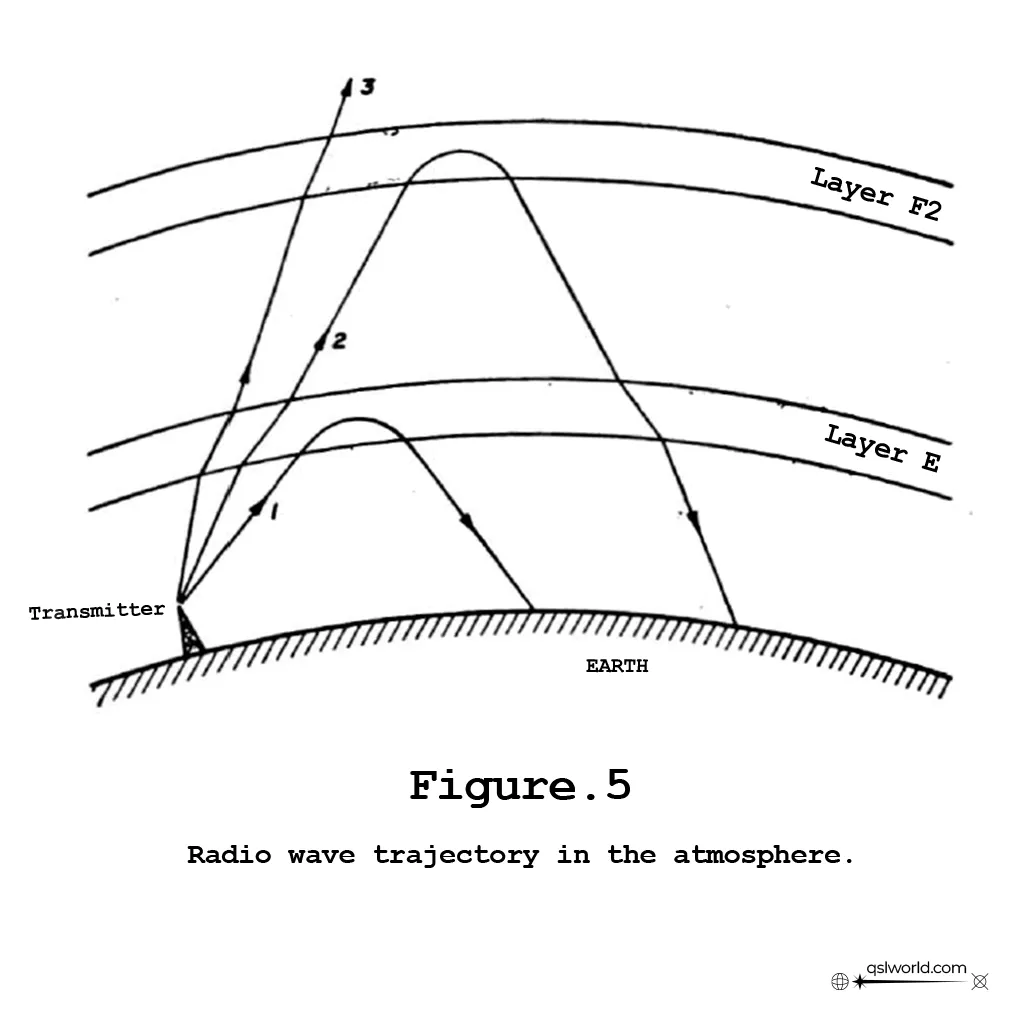
Sky waves are refracted by the ionosphere, enabling long-distance communication. Their behavior depends on ionization levels and wave frequency (see Figure 5).
4. Wave Bands and Their Characteristics
4.1 — Long Waves (3–30 km)
Stable propagation with minimal fading.
Used for navigation but requires high transmission power.
4.2 — Medium Waves (200–600 m)
Heavily absorbed during the day; better at night.
Commonly used for broadcasting.
4.3 — Short Waves (10–200 m)
Ideal for long-distance communication.
Sensitive to ionospheric conditions but resistant to interference.
4.4 — Metric, Decimetric, and Centimetric Waves (<10 m)
Not reflected by the ionosphere; rely on line-of-sight propagation.
Minimal fading and atmospheric impact; used in radar and satellite communication.
5. Anomalies and Special Conditions
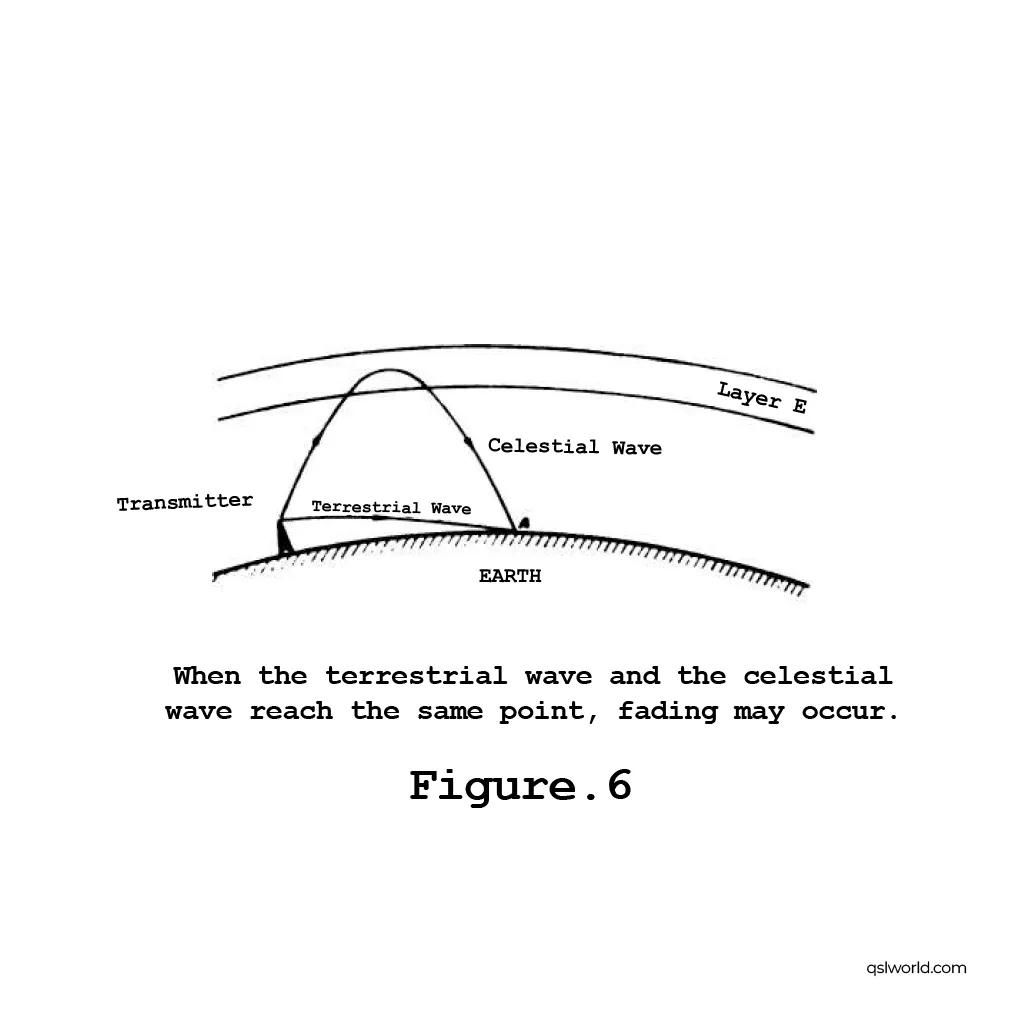
Solar activity, meteor trails, and tropospheric changes can cause unexpected propagation phenomena, such as long-range reception of ultra-high frequencies.

Summary
This post provides a comprehensive overview of how the Earth’s atmosphere and ionosphere influence radio wave propagation. Key factors include ionization levels, wave frequency, and surface properties. Understanding these principles is crucial for optimizing communication across different wavebands.
Figure References:
Figure 1: Ionosphere layers (D, E, F1, F2).
Figure 2: Reflection of radio waves.
Figure 3: Refraction of radio waves.
Figure 4: Diffraction of radio waves.
Figure 5: Sky wave propagation in the E and F2 layers.
By understanding these concepts, you can optimize your radio communication strategies and make the most of Solar Cycle 25’s peak!
Don’t forget to subscribe to our newsletter and visit our web store.